
Why Off-the-Shelf Dashboards Fail Growing SMEs and What Custom Business Portals Do Instead
Your off-the-shelf dashboard is not broken. It is just built for someone else’s business. For growing UK SMEs, that distinction costs real money, because you are making decisions from data that does not reflect how your business actually works, who owns what, or what matters this week.
This post covers why generic reporting tools hit a ceiling, what a custom business dashboard for a UK SME actually looks like in practice, and the specific point at which building something bespoke stops being a luxury and becomes the smarter call.
The problem with off-the-shelf dashboards
Tools like Google Data Studio, standard HubSpot reports, or the built-in analytics in your CRM are genuinely useful at the start. They give you something. But as your business grows, they start to work against you in ways that are hard to name until you step back and look.
The core issue is that these tools are built around their own data. They show you what is happening inside the tool, not what is happening in your business. Your pipeline lives in HubSpot. Your jobs or projects live in something else. Your accounts live in Xero or QuickBooks. Your ops team tracks capacity in a spreadsheet. None of these talk to each other by default, so your Monday morning view is always incomplete.
Most owners compensate by spending an hour pulling numbers together before a leadership meeting. Every week. That is around 50 hours a year of your most expensive time doing manual data wrangling.
What you actually end up doing
You open four tabs. You copy numbers into a slide or a spreadsheet. Someone has updated a figure differently to how you expected. You end up chasing the right number instead of making a decision from it. The meeting starts late. The discussion is about the data rather than about the business.
I have sat in those meetings hundreds of times, both running my own businesses and working with clients. The data is always slightly wrong, slightly late, or slightly out of context. And the person who built the original report left six months ago.
What growing SMEs actually need from their reporting
A business owner running a team of 10 to 50 people does not need 200 metrics. They need about 12 to 15 numbers that tell them whether the business is healthy right now and where the risk sits. The problem is that those 12 numbers almost never come from a single source.
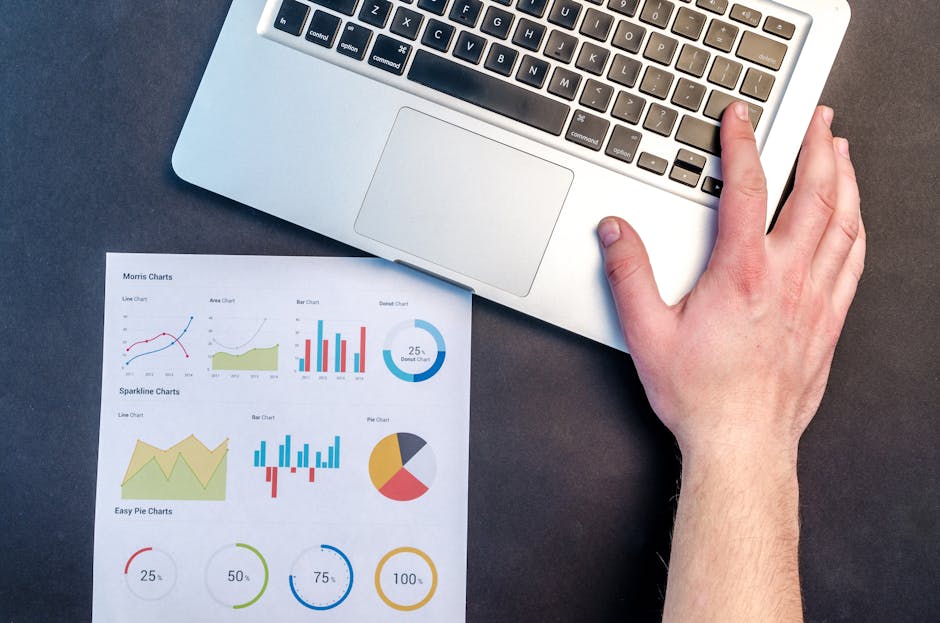
Here is what a useful dashboard for a growing SME typically pulls together.
- Live revenue versus target, broken down by product line or service category
- Pipeline value and movement in the last 7 days
- Capacity and utilisation if you sell time or services
- Cash position and 30-day forecast
- Overdue tasks or jobs at risk
- Team performance by individual or function
- Customer health scores or support ticket trends
None of that lives in one place. So a custom business dashboard for a UK SME is not really a reporting tool. It is a data integration project with a clean front end on top.
What a custom dashboard actually involves
This is where most conversations go wrong. People hear “custom dashboard” and picture a developer spending three months building something expensive. Sometimes that is right. Often it is not.
The way 07 Heaven Systems approaches this is through automation-first architecture. We use tools like n8n to connect your existing platforms, pull data into a clean structure, and then surface it through a dashboard that reflects your actual business logic. Not a templated view of your CRM. Your numbers, your definitions, your decision-making framework.
We built this for a commercial cleaning company in the West Midlands earlier this year. They had 23 active contracts, jobs tracked in a field service app, invoices raised in Xero, and a sales pipeline in HubSpot. Their director spent 90 minutes every Friday pulling a weekly review together. We connected all three platforms through n8n, built a single dashboard in Looker Studio with their specific KPIs, and automated the Friday summary as a scheduled email. That 90 minutes dropped to zero. The numbers arrived in their inbox at 08:00 every Friday, accurate, with no manual input.
The difference between integration and automation
Integration means the data moves between systems. Automation means something happens with it without you touching it. You want both. A dashboard that still requires someone to press buttons to update is just a prettier spreadsheet.
When Luke Stillwell talks about this in workshops, he makes a specific point from his 19 years running businesses: the goal is not to see your data faster. It is to stop thinking about your data at all, because the system surfaces the right alert at the right time so you can focus on the decision, not the number.
When does a custom build make financial sense
There is a straightforward way to think about this. Add up the time your team currently spends on manual reporting each week, multiply by your average hourly cost, and multiply by 52. For most SMEs with a leadership team of three to five people, that number lands somewhere between £8,000 and £25,000 a year.
A well-built custom business dashboard for a UK SME typically costs between £2,500 and £8,000 depending on the number of integrations and the complexity of the logic. The payback period is usually under six months. But the financial case is almost secondary.
The real cost of poor reporting is the wrong decisions. You renew a contract because the renewal report did not flag declining usage. You under-resource a busy month because your capacity view is two weeks behind. You miss a cash crunch because your P&L only updates when your bookkeeper sends it. Those are not reporting problems. Those are business problems caused by reporting failure.

The three signs you have outgrown your current dashboard
You do not need to audit your whole tech stack to know if this applies to you. Three signs are enough.
First, your team builds workaround reports. If people are exporting data from your system and manipulating it elsewhere before they trust it, your system is not doing its job.
Second, you cannot answer a simple question in under two minutes. If someone asks how much revenue you closed last week and you have to check three places, that is a systems problem.
Third, your leadership meetings start with data alignment rather than decisions. If the first 15 minutes of any meeting is spent agreeing which numbers are right, you are paying your leadership team to do manual reconciliation.
One of those is a warning sign. All three means you are already behind where you should be.
What to look for in a custom dashboard build
Whether you work with 07 Heaven or someone else, the quality of the outcome depends on a few things that are worth knowing before you start.
First, the build should start with your decisions, not your data. The right question is not ‘what data do you have?’ It is ‘what decisions do you make each week and what would make those faster or safer?’ That conversation changes the entire scope of what gets built.
Second, the connections should be API-based where possible, not manual exports. If anyone has to do anything for the dashboard to update, it will drift. Real-time or scheduled automated pulls only.
Third, the platform matters less than the logic. Looker Studio, Power BI, a custom-coded front end, even a well-structured Notion database can all work depending on your context. Do not let a vendor sell you a specific platform before they understand your business.
You can read more about how we approach AI and automation builds on the 07 Heaven services page.
Common questions
How long does it take to build a custom business dashboard for a small business?
For most SMEs with three to five data sources, a working dashboard with automated data pulls takes between two and six weeks from scoping to delivery. The biggest variable is how clean your existing data is and how quickly your team can confirm what the key metrics should be. A business where the owner can define their top 12 KPIs in a single conversation will move faster than one where that conversation involves five people and three rounds of changes. Most of the time, the technical build is not the bottleneck. Clarity about what matters is.
What is the difference between a custom dashboard and just using Power BI or Looker Studio?
Power BI and Looker Studio are front-end visualisation tools. They show you data, but they do not move it or transform it. A custom business dashboard for a UK SME is the full stack: the connections between your platforms, the logic that cleans and structures the data, and then the visualisation layer on top. You can absolutely use Looker Studio or Power BI as the front end of a custom build. The custom part is everything underneath it. Buying Power BI without building the integration layer is like buying a picture frame without having a picture to put in it.
Do I need a developer to maintain a custom dashboard once it is built?
Not if it is built well. The automation layer, typically using a tool like n8n, runs on its own. If your underlying platforms change their data structure or you switch a tool, someone needs to update the connection. But that is maintenance work, not ongoing development, and it rarely happens more than once or twice a year. A good build includes documentation so your team knows what connects to what, and any competent automation specialist can pick it up without needing to understand the original build from scratch. At 07 Heaven Systems, we include a handover session and documentation as standard so you are never dependent on us to keep the lights on.
Join our next AI workshop to see how we build connected dashboards live, using real business data and the tools most UK SMEs already own.
Rather have it built for you? See what an AI automation agency actually does and how we build and run these systems for UK businesses.


Ready to put this into practice?
Book a free discovery call and we will show you exactly what is possible for your business. No obligation.
4.8 ★★★★★ from 35 Google reviews by business owners like you.